Vessel telemetry
Maritime operational efficiency
Maritime Operations Intelligence
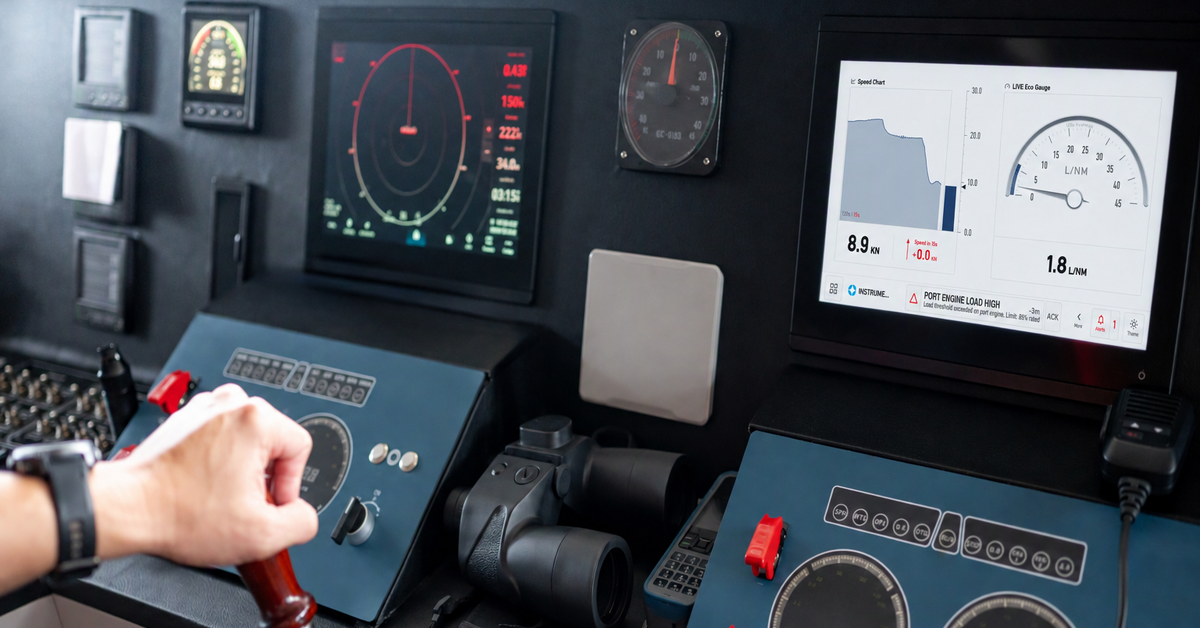

How the On Watch Master Interface connects shore-side operational intelligence with onboard decision-making to support safer, smarter and better fleet operations.
Commercial vessels have never produced more operational data
Engine load, fuel consumption, speed, idle time, alarms, voyage information, passenger movements and performance history. The opportunity is to build it into real-time vessel operations.
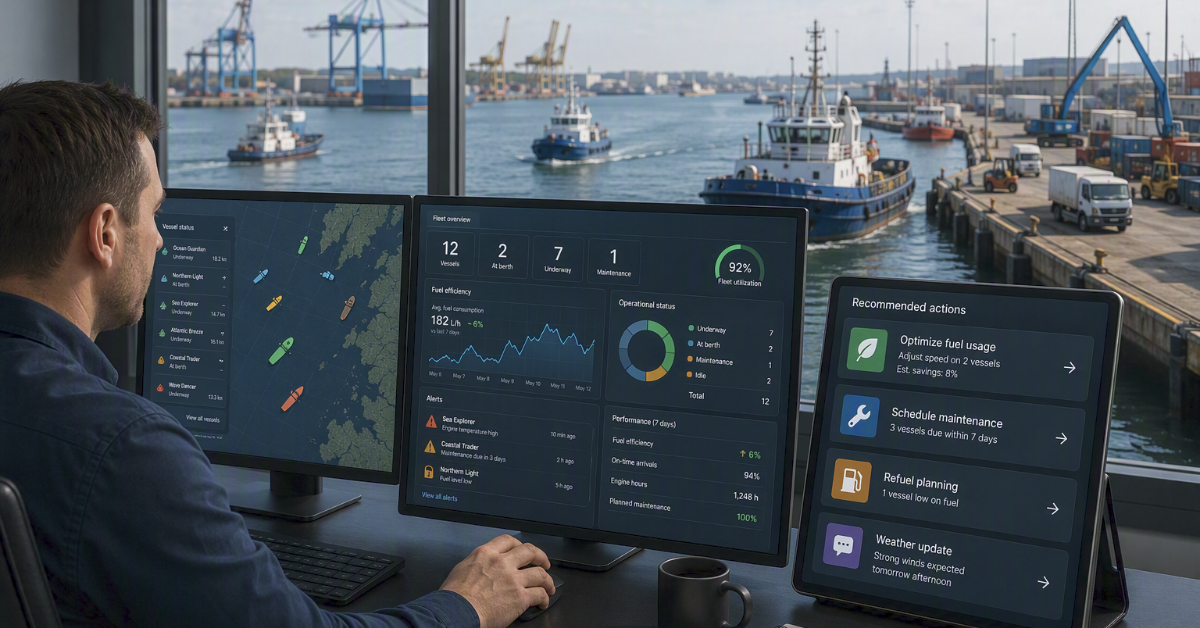
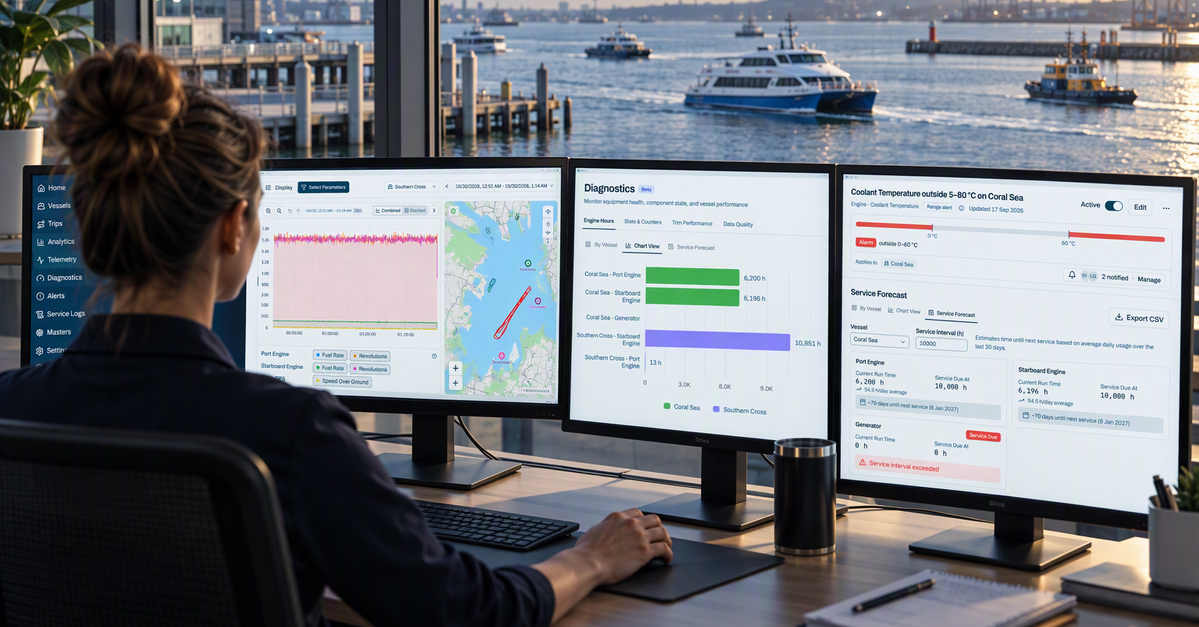
Fleet and operations teams use vessel intelligence to understand performance, recognise trends and make decisions across the fleet. While on board, masters and crew make the real-time decisions that shape each vessel’s safety, efficiency and operational performance.
Advanced fleet operations depend on both the use of data to improve operations across the fleet and optimising every voyage.
The On Watch Master Interface helps connect them by putting relevant operational intelligence in the hands of the master. It helps the crew understand what is happening, make better-informed decisions and learn from the results, while giving the wider operation a stronger connection with what is happening on every vessel, trip and shift.
Better information at the point of decision
Consider a passenger ferry operating the same route throughout the day. The timetable must be maintained, but there may be opportunities to deliver the same service more efficiently.
With live speed, fuel rate and fuel economy visible on board, the master can see the effect of an operating decision as it happens. A change in speed or throttle provides immediate feedback: is the vessel maintaining the required service, has fuel economy improved, and could this become a better way to operate that part of the route?
Instead of waiting for a post-voyage report, the master can learn while the vessel is operating. Onshore teams can then view performance in the wider context of routes, shifts and fleet objectives.
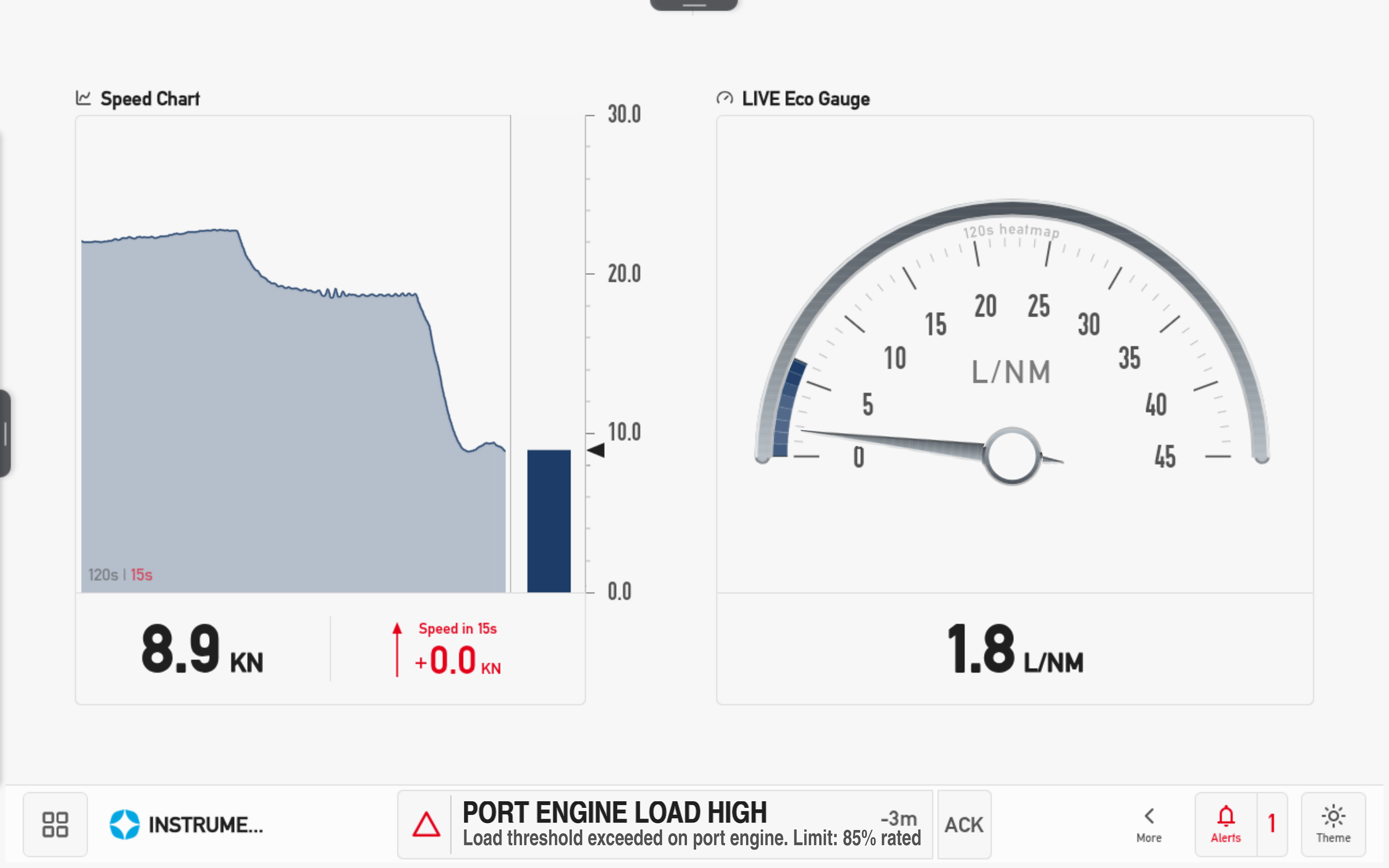 Live speed history and fuel economy provide immediate feedback on operating decisions.
Support experience, rather than replace it
Experienced masters and crew already bring deep operational knowledge to their work. The opportunity is not to replace that judgement with data. It is to make their experience even more effective by adding timely, objective feedback.
If engine load exceeds a defined threshold, the Master Interface can display an onboard alert with the relevant readout and status. The crew can assess the situation where it is occurring, respond as appropriate and acknowledge the alert. The event also becomes visible within the wider operation, supporting follow-up and learning.
The same principle applies to less urgent but commercially important behaviour. If a vessel is idling longer than expected, an idle timer makes the accumulating time visible while there is still an opportunity to act, rather than leaving the impact to be discovered later in fuel and engine-hour reports.
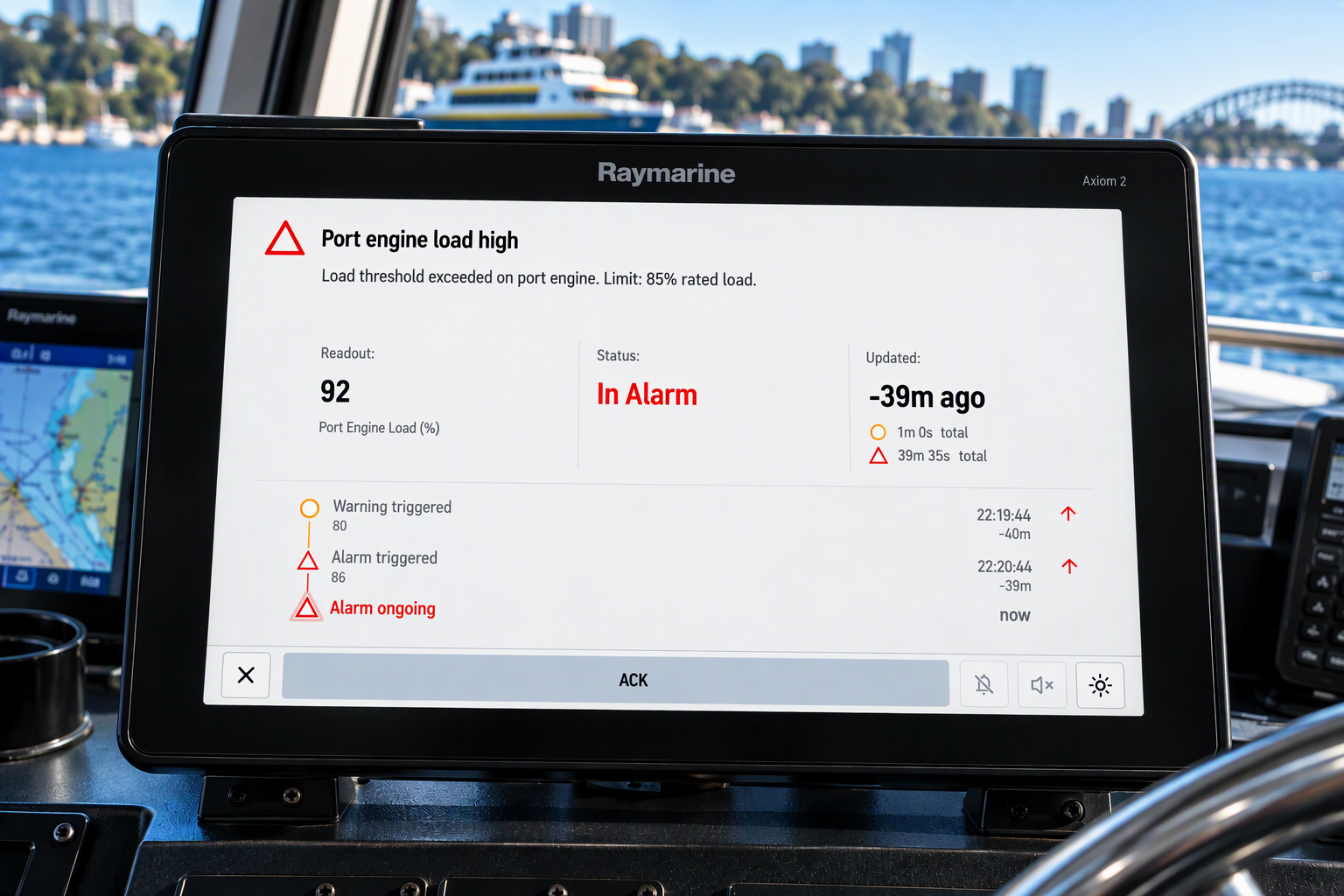 A detailed engine-load alert shows the current readout, status and progression from warning to alarm.
Turn routine operations into a learning loop
Not every improvement comes from responding to an alarm or making one major decision. In commercial marine operations, small decisions are made continuously, and repeated operating cycles create valuable opportunities to learn.
Trip and shift fuel-performance scorecards help crews see how they are tracking and how things change as operating practices evolve. A crew may find that a slightly different approach achieves the required service outcome with better fuel performance. The result can be reviewed, repeated and refined on the next trip.
One trip informs the next. One shift builds on the last.
For operational leaders, this moves improvement beyond retrospective reporting. Onboard experience and fleet-wide intelligence can inform each other, helping good practices spread beyond one person, shift or vessel.
Make frontline activity part of the wider operation
Some of the most valuable operational information originates on board: a developing issue, an event during a voyage, a change in vessel performance, or something noticed by the crew.
The Master Interface allows events to be recorded as they occur, creating a shorter path between seeing something, responding to it, recording what happened and making that information available to the wider operation.
For example, in passenger ferry and tourism operations, passenger numbers, vehicle counts and other trip information can also be captured on board. This keeps critical log information linked to the vessel’s activity. Automation and system integrations can improve data accuracy and reduce administrative tasks that distract crew from safe and efficient vessel operations.
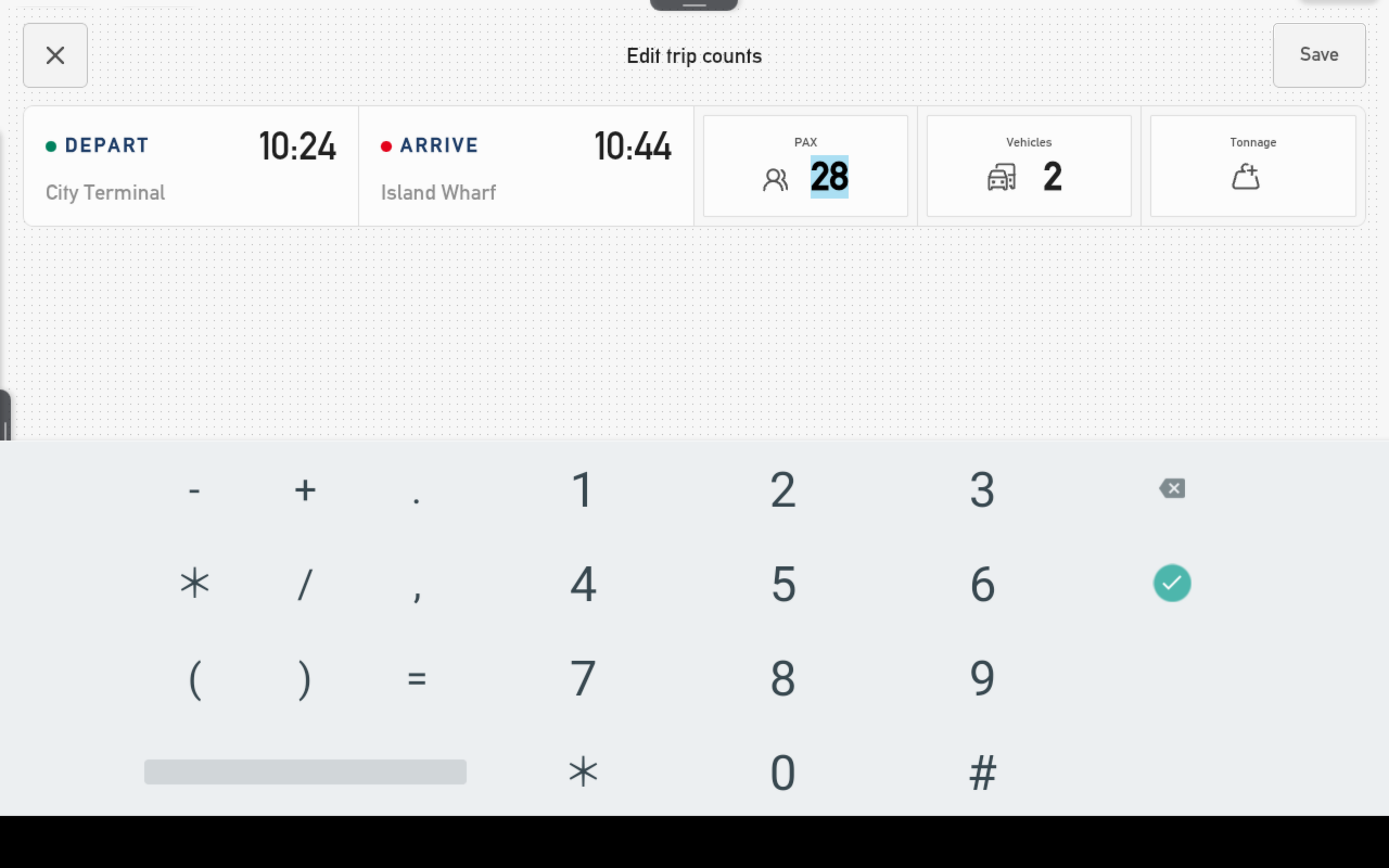 Passenger and vehicle information can be entered on board as part of the trip workflow.
Give people the information their work requires
More information is not always better. On a busy vessel, presenting every available data point can become another distraction.
Operational context matters. The information required while underway can differ from what matters when berthed. Different vessel types and services also create different priorities. The objective is therefore not to expose all the available data, but to make the right information clear and useful for the task at hand.
Displays and settings can be managed remotely from shore, helping fleet teams maintain a consistent operating environment across vessels working from different ports and locations, while keeping the onboard experience relevant to crew needs.
From better-informed people to a continuously better fleet
One small improvement in fuel economy will not transform a business. Neither will one period of unnecessary idling avoided, one alert acted on sooner or one operational event recorded more completely.
But commercial fleets make thousands of operational decisions across vessels, voyages and shifts. When masters have better information, those decisions can produce better results. When the outcomes are connected with operational intelligence, the organisation can identify what works, reinforce good practice and keep improving.
Better-informed people. Better-connected decisions. Better fleet results.
That is the bigger role of the On Watch Master Interface. It is not simply another on-screen element on board. It connects the people closest to each vessel with the teams responsible for the performance of the wider operation.
For masters and crew, that means relevant intelligence and immediate feedback at the point of decision. For fleet and operations teams ashore, it means richer insight into what is happening on board and a stronger basis for decisions across the fleet.
Together, onboard expertise, vessel data, and fleet intelligence can continually inform one another. That helps people perform at their best and makes the whole operation safer, smarter and better.
See it on your own vessels
Every operation is different. The best way to understand the value of the On Watch Master Interface is to see how it works for your vessels, crews and routes.
Get in touch to discuss your operation, or ask about trialling the On Watch system on your fleet.
Contact us to arrange a conversation or request a trial, and we will help you see how better-informed people can deliver a better fleet.
On Watch: The Maritime Operating System for Advanced Fleet Operations.