Vessel telemetry
Maritime operational efficiency
Data-Driven Decision Making
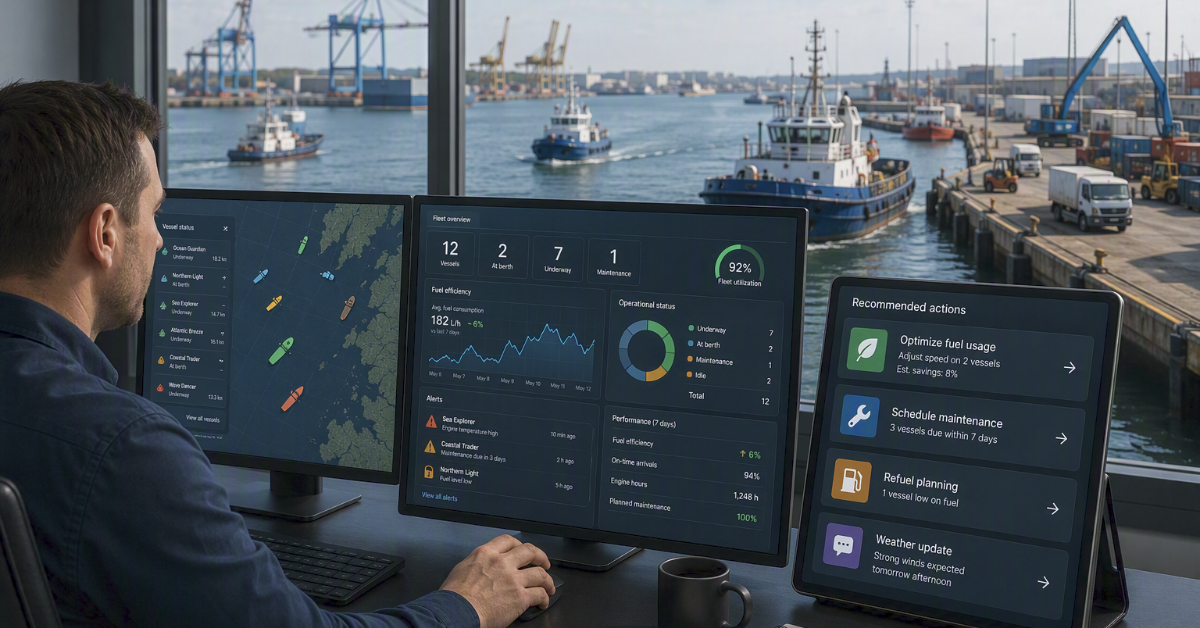

Over time, vessel telemetry has increasingly helped maritime operators understand what is happening aboard their vessels.
By automatically capturing data from onboard equipment and systems, telemetry gives operators greater visibility of vessel performance, machinery, alarms, operating conditions and other critical information.
As vessels, operating systems and shoreside teams become increasingly connected, that information can play a much greater role across the entire operation, connecting people, systems, intelligence and workflows to help fleets operate better.
This is the thinking behind The Maritime Operating System.
For On Watch, it represents the evolution from vessel telemetry to Advanced Fleet Operations: a more connected, intelligent, automated and easier way to operate maritime fleets. This reflects the progression from data through information, intelligence and action to continuous improvement.
Good fleet operations depend on good information.
Vessel telemetry provides a direct connection to what is happening aboard the vessel, automatically capturing trusted data from onboard equipment and systems.
On Watch's telemetry capabilities include real-time monitoring, vessel and equipment information, alarms, alerts and automated data capture.
Better automated capture provides crews and operators with trusted vessel information while reducing manual recording and freeing more time to focus on operating the vessel.
Turn vessel and voyage data into smarter fleet management.
As On Watch has evolved, so has the role this information can play. Telemetry can feed information across the operation, make it easier to understand, help people act on it, and provide the evidence needed to continually improve how vessels and fleets operate.
Telemetry is the foundation of the Maritime Operating System, not its limit.
The evolution can be understood as a simple progression:
DATA → INFORMATION → INTELLIGENCE → ACTION → IMPROVEMENT
At the beginning, is trusted data from vessels and onboard systems.
That data becomes useful operational information. Information creates intelligence and recommendations. Intelligence supports workflows and actions. And the evidence generated across the operation helps crews, managers and operators continuously improve fleet and people performance.
A Maritime Operating System connects information with the wider operation so people can understand it, use it and act on it.
For On Watch, The Maritime Operating System describes an increasingly central platform that brings together people, vessels, operational data, systems, intelligence and workflows.
The objective is Advanced Fleet Operations: Safer. Smarter. Better.
On Watch can connect with specialist systems already used across maritime operations, while providing the opportunity for more operational capability to sit natively within On Watch as the platform develops.
The value lies in bringing more of the operation together, reducing unnecessary fragmentation and manual administration, and making useful information easier for people to understand and act upon.
Ultimately, advanced technology should make maritime operations easier.
On Watch groups this progression into five connected areas:
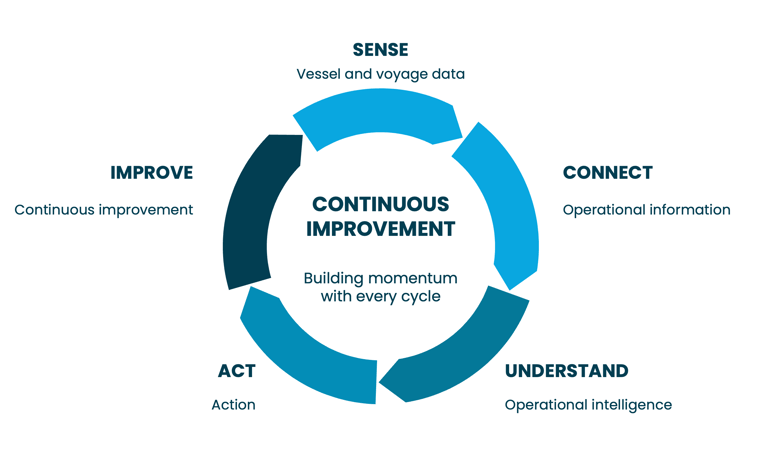 SENSE
Vessel and voyage data
Capture trusted information directly from vessels and onboard systems.
This is where On Watch's telemetry heritage remains critical: real-time monitoring, equipment and vessel information, alarms, alerts and automated data capture.
Better automated capture provides crews and operators with trusted information, reduces manual recording and creates more time to concentrate on safe and efficient vessel operations.
Less logging. More operating.
CONNECT
Operational information
Make operational information flow easily and efficiently.
Vessels operate as part of a much wider operational environment. On Watch helps information flow between vessels, people, shoreside operations and connected systems.
On Watch can connect vessel information with other systems and operational workflows so trusted information reaches the people and applications that need it. Its integration with Helm CONNECT, for example, can automatically supply vessel and operational information to the operational platform.
This can mean less re-keying, less duplicated administration and less effort moving information between systems.
Systems should communicate so people don't have to keep transferring information between them.
UNDERSTAND
Operational intelligence
Data becomes more valuable when people can understand and use it.
On Watch transforms operational data into reporting, analysis and intelligence, including trends, benchmarking, operational and reliability insights, performance analysis and decision-support information.
On Watch makes the information that matters easier for crews and fleet managers to see, understand and use.
Know what matters.
ACT
From information to action
Understanding what's happening creates the opportunity to respond.
On Watch is progressing from identifying what happened towards helping determine and increasingly coordinate what happens next, encompassing areas such as operational events, automated information flows, voyage processes, workflows and coordinated operational responses.
Automation can remove repetitive activity and operational friction, allowing people to focus their judgement and attention where it matters.
Less administration. More operation.
IMPROVE
Continuous improvement
Operational evidence helps people identify opportunities to improve the vessel, the operation and the wider fleet.
That can encompass safety, reliability, operating efficiency, energy efficiency, CO₂ reduction, utilisation, maintenance, compliance, operating practices, administration and service outcomes.
Better operational information can help identify where energy is being used, where efficiency can be improved, and where changes in vessel or fleet operations can reduce fuel use and CO₂ emissions.
In this way, On Watch can help operators identify and direct a more efficient fleet, using real operational information to support better decisions and continuous improvement.
And then the process starts again:
SENSE → CONNECT → UNDERSTAND → ACT → IMPROVE → SENSE
This creates a continuous operating improvement loop, using better operational evidence to help people progressively improve vessel and fleet performance.
More connected and capable technology should ultimately make maritime operations easier for those who use it.
For On Watch, Advanced Fleet Operations means:
LESS MANUAL WORK
Automatic capture, fewer duplicate entries and less routine administration.
MORE OPERATIONAL FOCUS
More time for crews to concentrate on safe and efficient vessel operations.
BETTER DECISIONS
The information that matters made easier for managers and operational teams to understand and use.
Sophisticated fleet technology should reduce unnecessary administration and complexity and help people concentrate on the operation.
Technology earns its place when it makes work and operations better for people.
From monitoring fleets to improving them
The Maritime Operating System builds on the strong telemetry foundations of On Watch and extends their value across the wider operation.
Telemetry provides the connection to the vessel.
Connectivity makes information available across the operation.
Intelligence makes it easier to understand and use.
Workflows and automation help translate information into action.
Continuous operational evidence helps people identify opportunities to improve safety, reliability, efficiency, energy use, vessel performance and the effectiveness of the wider fleet.
Together, these capabilities create an increasingly connected cycle of
SENSE → CONNECT → UNDERSTAND → ACT → IMPROVE.
That is the promise of The Maritime Operating System: bringing information, systems and people together to help operators run and continuously improve their fleets.
On Watch. The Maritime Operating System.
Advanced Fleet Operations.
Safer. Smarter. Better.